
ORAL HYGIENE

Start Great Oral Hygiene Habits Early

Promoting a lifetime of bright smiles

Keeping your child’s smile healthy and bright

It is important to start your child’s good oral hygiene habits early. By the time your child’s first primary “baby” teeth begin to erupt between the ages of six to twelve months, it’s already time to start establishing proper dental hygiene and seeing a dentist to keep your child’s smile healthy and bright.
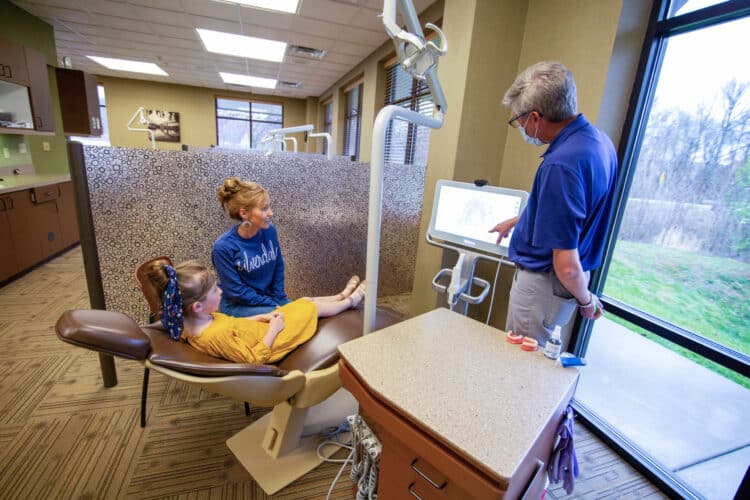
Oral Hygiene

Oral Hygiene

Establishing Good Habits

Regularly inspect your child’s teeth and gums every two weeks to look for lines and discoloration that may be caused by decay. Avoid sugary foods and liquids that can attack a new tooth, and take care that your child brushes their teeth twice a day, especially after feeding or eating. For children under three, the American Academy of Pediatric Dentistry recommends using a smear of toothpaste only about the size of a grain of rice when brushing their teeth for optimal oral health.

When a baby’s tooth erupts, parents should brush the tooth with a soft-bristled toothbrush and a pea-sized amount of toothpaste. For children younger than two, do not use fluoride toothpaste unless instructed to do so by your dentist or healthcare professional.

As your child grows, we recommend reviewing proper tooth brushing procedures with your child as they begin to do it themselves.

Flossing is also an important aspect of good oral hygiene habits, and your dentist will discuss with you when the right time will be to begin flossing your child’s teeth. If at any point in your child’s growth you notice signs of decay, contact your dentist immediately.

Brushing Tips & Tricks
Flossing Tips & Tricks

Preventing Tooth Decay

At Home

Tooth decay is caused by sugars left in your mouth that turn into an acid, which can slowly break down your teeth. Children are at especially high risk for tooth decay for one simple reason: many children and adolescents do not or simply do not know how to practice regular, good dental hygiene at home.

Ways To Prevent Tooth Decay At Home

  • Proper brushing and flossing

  • Avoiding sugary foods and drinks

  • Visiting your dentist regularly

  • Using at-home hygiene products that include fluoride such as toothpaste and mouthwash. When choosing an at-home fluoride product, always check for the American Dental Association (ADA) seal of acceptance. Products marked with this seal have been carefully examined and approved by the ADA based on the product’s safety and effectiveness.

In The Office

It is recommended that your child visit the dentist every six months for regular dental cleanings and checkups. This gives your dentist an opportunity twice a year to provide a fluoride treatment alongside a professional cleaning that will help keep teeth at their strongest.

Ways To Prevent Tooth Decay In the Office

  • Fluoride treatment in the dentist’s office. Unlike topical fluoride treatments found in a toothpaste or mouthwash, the fluoride treatment patients receive at a professional clinic are known as systemic fluorides, which are much stronger. After a fluoride treatment in the dentist’s office, patients may be asked not to rinse, eat or drink for at least 30 minutes to allow the teeth time to absorb the fluoride. Depending on your child’s oral health or doctor’s recommendation, your child may be required to have a fluoride treatment every three, six or twelve months. Your doctor may also prescribe at-home products such as mouthwashes, gels and antibacterial rinses.

  • Sealants Sealants may also be placed on the teeth at your child’s dentist visit to “seal” the deep grooves of the teeth, preventing decay from forming in those hard-to-reach areas. After they’re put on, these sealants will be monitored at your child’s regular checkups to make sure they are holding strong and are not in need of replacement.

Let’s Get Started

Creating healthy, beautiful smiles through comprehensive, compassionate care.

girl in school smiling